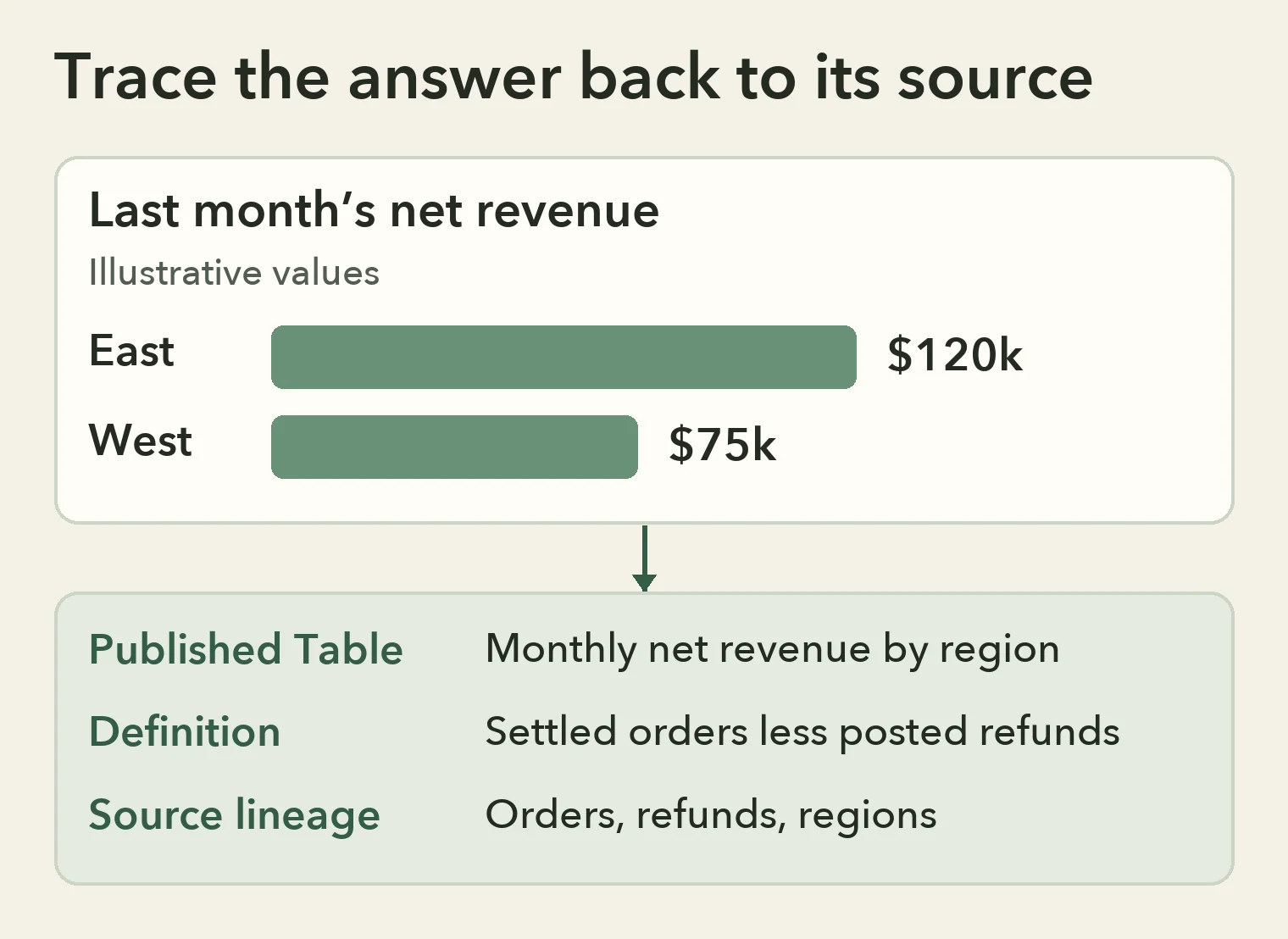
How ADITS gives AI agents a governed way to query business data
Follow a business metric from a source database through an ADITS Table that an AI agent can query and trace. See where the Rebyte Agents API fits.
Define the question before writing the query
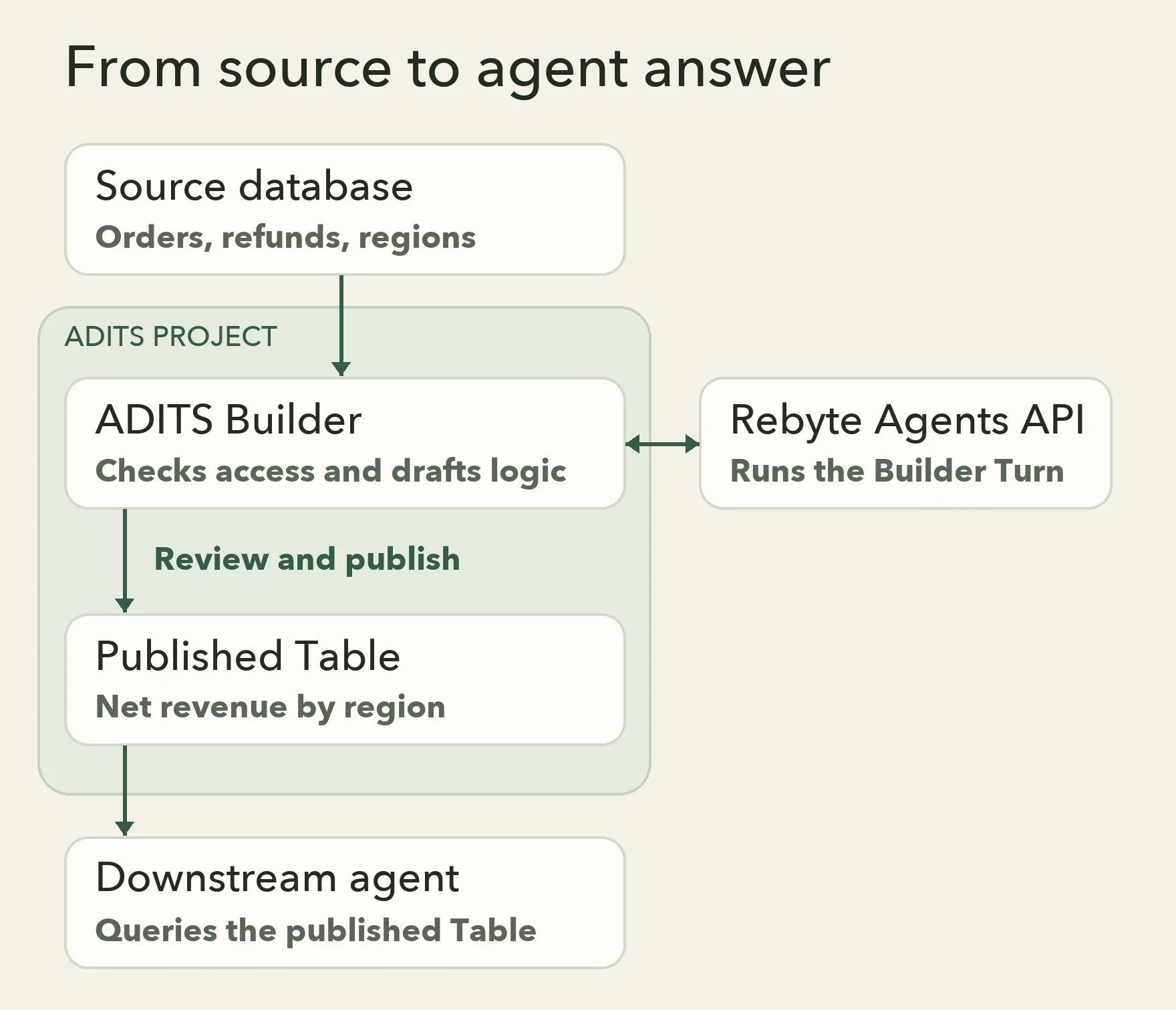
Suppose an agent is asked for net revenue by region for last month. In a typical business, the answer depends on a few decisions. Which order states count? How are refunds handled? Which date and region belong to a sale? A source database can contain all the facts without naming the right combination.
In ADITS, a Project defines Tables with named columns, descriptions, business logic, and source lineage. A sales team could publish a Table with a clear grain and a net revenue definition. The next agent can discover that definition and query the published Table for another month without rediscovering the joins.
Use the Agent to build the definition
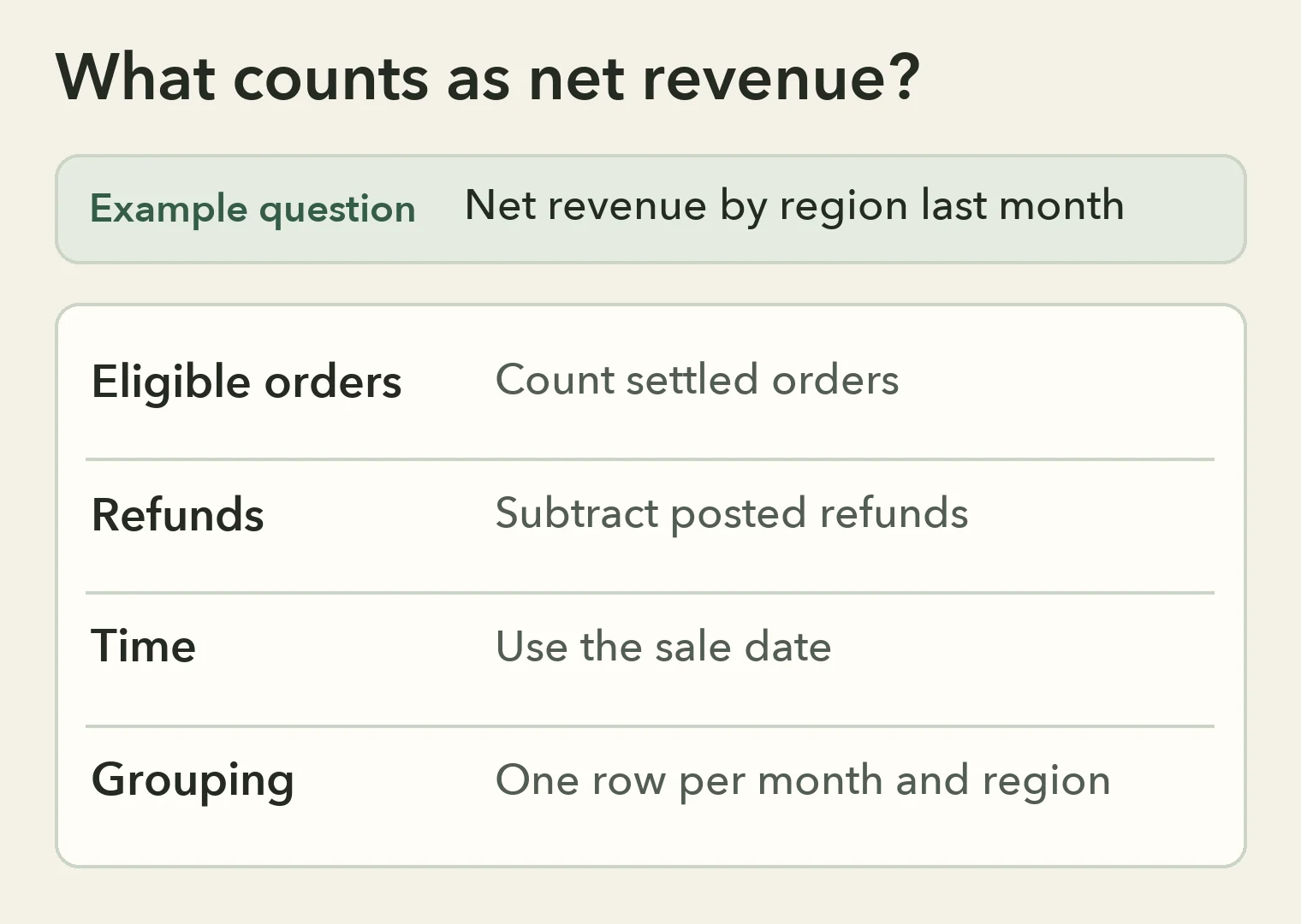
The ADITS Builder uses the Rebyte Agents API for its conversation and model execution. A Builder conversation is associated with a Rebyte Session, and a submitted run is associated with a Turn. The runtime can request an application function during that Turn. ADITS checks the Project and the request before running the function and returning the result.
These functions mediate access to source metadata and bounded data inspection. They let the Builder use evidence when it proposes a definition. Source access and credentials stay in the ADITS data path. A person can review the proposed Table and its logic before publishing.
Publish a stable query surface
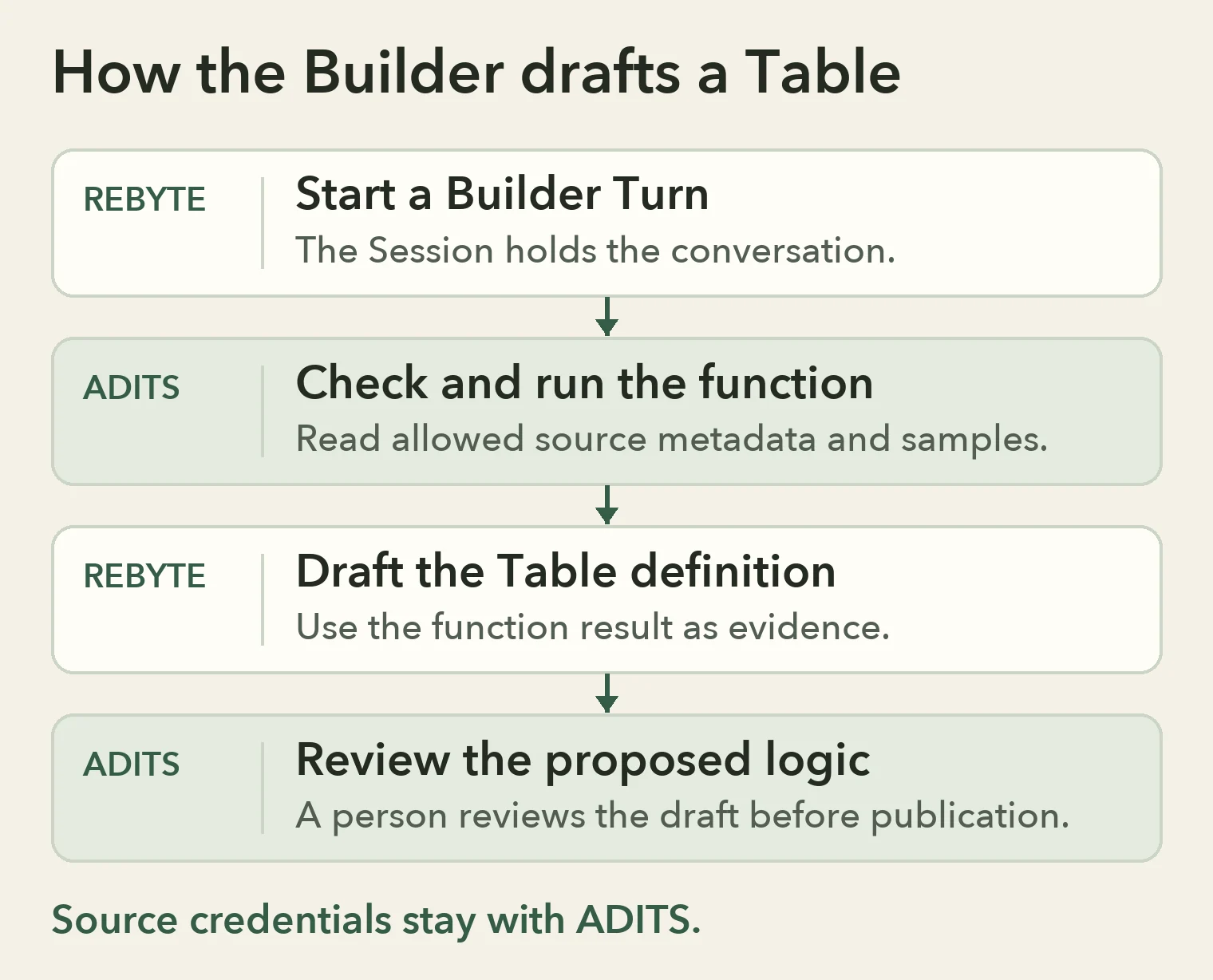
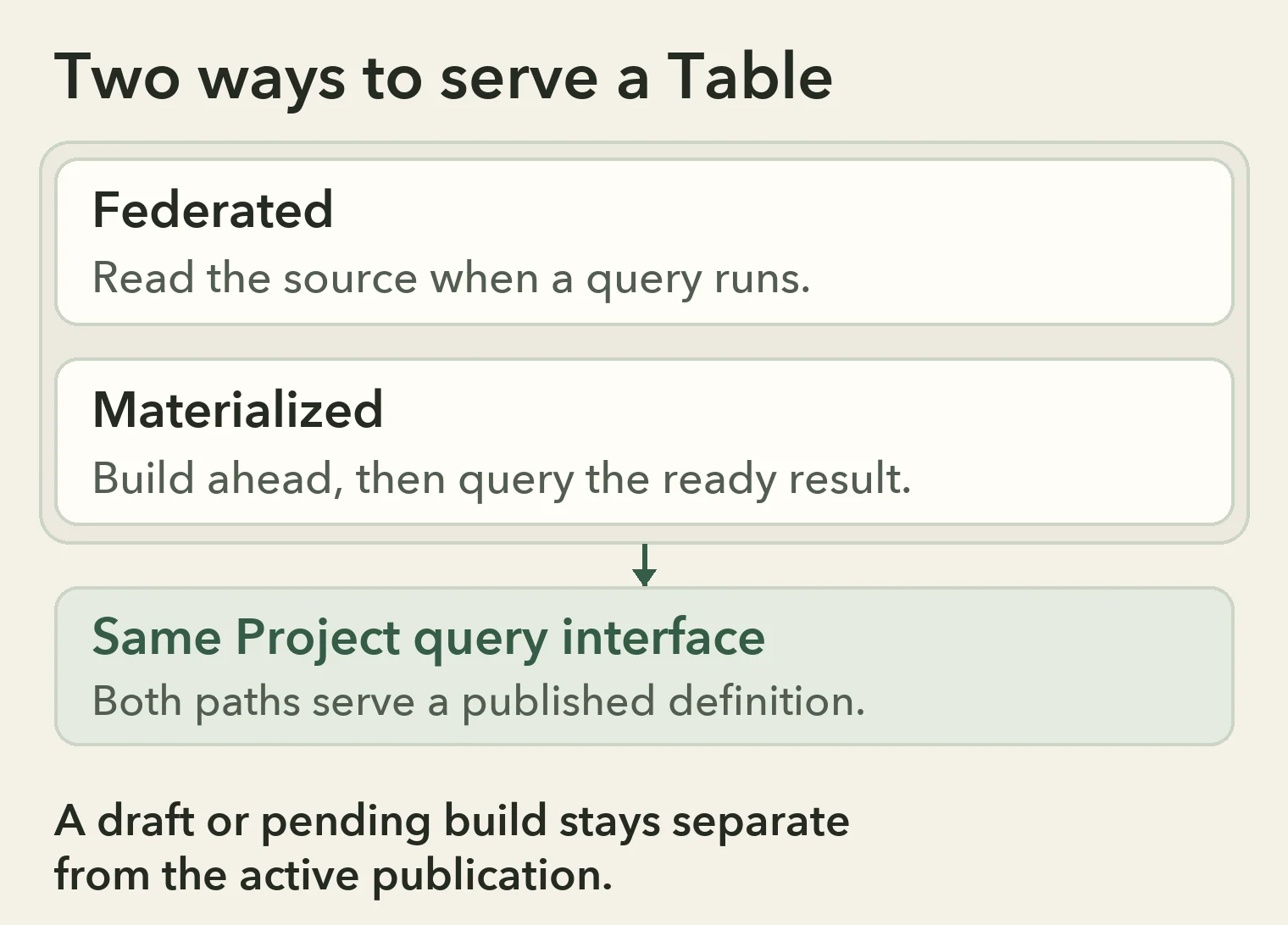
A Federated Project resolves its Tables against the connected sources at query time. A Materialized Project builds the Tables ahead of time and serves the ready result. The choice trades source-time freshness against the cost and timing of a build. In both cases an agent queries the published definition through a Project-scoped interface.
A later Builder conversation can propose a revision, such as handling a new refund status. The proposed definition and any pending build are separate from the active publication. Readers can use the ready Tables while the revision is reviewed and prepared.
Give downstream agents an answer they can explain
A downstream agent can discover the published Tables and their columns, choose an allowed query, and use the results in its answer. The Table definition and lineage give a reviewer a path back to the source and the rules behind the number.
The two roles have different access. Rebyte runs the Builder Agent that helps design Tables. ADITS governs what a consuming agent can query and serves the published data. This boundary lets agents share the same business definitions across conversations and applications.